
What are you looking for?

Circularity in construction is often discussed, but rarely put into practice. How can you ensure that materials not only perform well today, but also remain reusable in the future?
That question was central to the design of the new offices for the architectural firm AST77. The result is a well-thought-out roof structure that combines ease of disassembly, durability, and reusability.
In traditional construction projects, the focus is on completion: performance, budget, and execution. What happens to the materials afterward is rarely taken into account in the design.
At the architectural firm AST77, that logic was deliberately reversed.
“The question isn’t just how we build, but also how we take it apart later,” says architect and business owner Peter Van Impe.
That mindset is at the heart of circular construction: looking not only at a building’s initial life cycle, but also at what is possible afterward.
Circularity is often reduced to the choice of sustainable materials. But in practice, the greatest impact lies in the way a building is constructed.
When materials are permanently bonded together, they lose their value when they are broken down. This makes reuse difficult or impossible.
For this reason, a different approach was chosen for this project: a roof structure in which the various layers can be dismantled and separated.
Not as a theoretical principle, but as a concrete design choice.
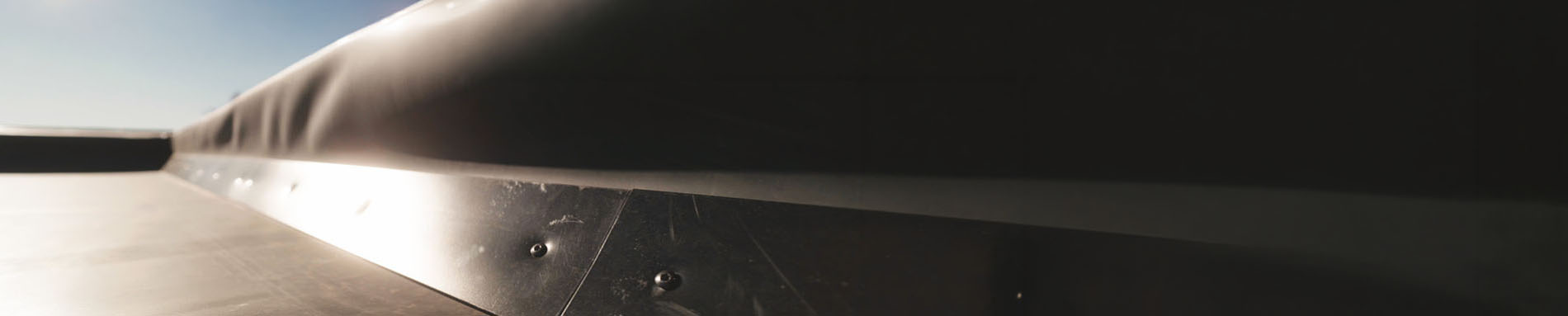
On the roof, the BossCover System was installed: a system that allows the various components to be disassembled and reused in the future.
This means that the roof structure is no longer a final product, but a system that can evolve over multiple life cycles.
A key aspect of this project is the use of recycled insulation, which was recovered from another construction site through CPE. By reusing this material, the lifespan of the materials is extended and the demand for new raw materials is reduced.
This combination makes the project particularly relevant in a circular context.
In addition to ease of disassembly, service life also plays a crucial role.
EPDM was chosen for the roof waterproofing, a material with a proven lifespan of 70 years or more. This means that the roof can remain functional for several decades without needing to be replaced.
In a circular approach, this is essential: the longer a material lasts, the lower its overall impact across its entire lifecycle. Combined with a modular design, this creates a system that not only performs well today but was also designed with the future in mind.
Above all, this project demonstrates that circular construction is already perfectly feasible today.
Not as an experiment or a niche application, but as a realistic option—provided it is incorporated into the design from the very beginning.
By designing systems that can be disassembled, combining materials with a long service life, and actively incorporating reuse, the role of the roof structure is shifting.
From a one-time solution to a system with a future.